Key facts
Full name
James Oscar Bass
Life
March 19, 1879 – February 3, 1950
First blacksmith shop
Quitaque, Texas — 1897
Tulia period
Early 1900s–1924
Retired from spur making
1924
Known for
Handmade bits, spurs and distinctive Texas-style decoration
1914
Metallurgy Award, Texas State Fair
1916
U.S. curb bridle-bit patent No. 1,167,541
Historic records
Copies of Bass work journals preserved at the Swisher County Museum
Who was J.O. Bass?
James Oscar Bass was born March 19, 1879, in Atlanta, Georgia. His family moved to Texas while he was a boy and eventually settled near Quitaque in the Panhandle.
In 1897, at age eighteen, Bass opened a blacksmith shop in Quitaque and began producing equipment for local ranchers and cowboys. His work earned a reputation beyond the immediate area: the Texas Historical Commission records orders extending to Montana and Nevada as well as customers among the Texas Rangers and Western movie star Tom Mix.
Bass later moved his operation to Tulia, Texas, where bit and spur making became a larger part of his business. He continued making Western gear until retiring his tools in 1924.
In 1914, Bass won the Metallurgy Award at the Texas State Fair for an elaborate pair of gal-leg spurs decorated with inlaid and overlaid gold and silver.
Bass died February 3, 1950. His craftsmanship remains closely associated with Texas bit-and-spur collecting, and his surviving work-journal records and museum records provide unusually useful evidence for identifying his work.
When did Bass move from Quitaque to Tulia?
Published sources do not completely agree on the exact year J.O. Bass moved his operation from Quitaque to Tulia.
The Texas Historical Commission places the move in 1902. A former Swisher County Museum director placed it between 1902 and 1904, Jane Pattie’s Cowboy Spurs and Their Makers gives 1905, and Bass’s 1950 obituary states that the Bass family moved to Tulia in 1906.
Because those sources differ, this guide uses “early 1900s” when discussing the transition rather than presenting one disputed year as universally settled.
Bass’s surviving work-journal records provide another useful clue: published reporting on the journals says the last Quitaque spur entry was No. 165 and the first Tulia entry was No. 166.
Quitaque and Tulia maker marks
Early Quitaque Work
Published Bass research describes early Quitaque spurs marked with J.O. BASS and QUITAQUE, TEX. on the shanks.
One documented early pair, No. 103, carries the number on top of the shanks, with J.O. BASS on one side and QUITAQUE, TEX. on the other.
Early Quitaque examples are often comparatively plain, reflecting Bass’s first years making working cowboy gear.
Tulia Work
After moving to Tulia, Bass commonly marked his spurs with wording such as:
NO. ___ MADE BY J.O. BASS TULIA, TEX.
Jane Pattie’s research, as reported by the Plainview Herald, says Bass normally stamped Tulia spurs on the outside of the inside heel band of the right spur, although both spurs were occasionally marked.
Some pieces also carry an owner’s name or date applied with individual letter dies.
Our examples No. 290 and No. 400 both use the Tulia maker wording.
Are J.O. Bass numbers serial numbers?
Bass pieces often carry a number alongside the maker mark. Those numbers are extremely useful collector references — but the surviving evidence indicates they should not be treated as unique serial numbers assigned to one individual object.
Published reporting indicates that the same number could appear on multiple pairs of spurs: Jane Pattie quotes Dwight Huber of Canyon, whose father recalled seeing orders in which the same numbers appeared on several pairs. That evidence supports the collector interpretation that Bass numbers functioned as pattern or style references rather than unique serial numbers.
That distinction matters. No. 400, for example, appears on multiple documented Bass pairs. That evidence shows the number was not unique to one individual pair.
Published evidence reported by Jane Pattie supports treating the numbers as pattern/style references rather than unique serial numbers.
The work journals are still extremely valuable. Bass recorded numbered bits and spurs along with descriptions, original customers and, in many cases, prices. Comparing a numbered object with the surviving ledger information can provide important authentication evidence.
No. 165 and No. 166: A clue to the shop move
Published reporting on the Bass work journals held by the Swisher County Museum notes that Bass’s final recorded Quitaque pair was No. 165 and the first recorded Tulia pair was No. 166.
This does not turn every Bass number into a precise calendar date. The ledger entries themselves are not dated, and the same number could be reused.
Instead, the 165/166 transition provides useful historical context when comparing surviving marks, locations and journal entries.
Why the Bass work journals matter
Bass’s surviving work-journal records provide unusually useful evidence for collectors studying his bits and spurs.
Copies of the journals are preserved through the Swisher County Museum. Published accounts describe entries containing the number and description of bits and spurs, often accompanied by the original purchaser and original selling price.
Museum staff have used those records to help evaluate whether surviving Bass pieces correspond with documented work.
The journals are powerful evidence, but they are not a shortcut. Numbers were reused, entries are not dated, and condition or later alterations still need to be evaluated on the physical object.
Details collectors associate with J.O. Bass
Half-Silver / Half-Copper Heart Buttons
One of the most recognizable Bass traditions is the heart-shaped swinging button decorated with half silver and half copper. Published Bass research says Bass used this treatment on many Tulia-made spurs, while the heart-button form itself dated back to his earlier work.
Our No. 400 pair is a direct example.
Straight Texas Profile
Early Bass spurs are described as having a relatively straight profile, long shank, narrow squared heel band and swinging buttons.
One-Piece Construction
Published accounts describe Bass forging his spurs from one piece of steel.
Silver, Copper and Custom Decoration
Bass used silver and copper decoration, brands, initials and custom treatments. His 1914 award-winning gal-leg spurs incorporated both inlay and overlay work in precious metals.
Bass bits: Forged for working cowboys
Bass’s 1912 catalog described his bits as forged from one solid piece of steel without a brad or weld in the principal construction. His designs emphasized practical cowboy use as well as craftsmanship.
Bass also patented a curb bridle-bit design. U.S. Patent No. 1,167,541 was issued January 11, 1916, and a copy is preserved by the Swisher County Museum.
The 1914 Texas State Fair spurs
Bass received the Metallurgy Award at the 1914 Texas State Fair for a pair of gal-leg spurs decorated with extensive gold and silver inlay and overlay.
Published Bass research identifies the design as style No. 249 in his 1912 catalog.
The award illustrates an important point about Bass: his reputation was built on durable cowboy gear, but his craftsmanship also extended into highly decorated exhibition-quality work.
“Bass style” does not mean “made by J.O. Bass”
We have handled a useful comparison piece: a pair titled Bass Style Card Suit Theme Spurs, SKU WTP.SP165.
Those spurs use visual details associated with Bass — including card-suit decoration and heart-shaped buttons — but we explicitly identify the maker as unknown.
This is an important collector lesson: a Bass-like pattern, heart button or decorative theme does not by itself establish J.O. Bass authorship.
Style is not a maker mark.
Authentication should consider the actual Bass hallmark, number and ledger evidence, construction, age, provenance and condition.
What should collectors look for?
Maker wording
Record the exact wording of the mark, including whether it references Quitaque or Tulia.
Number / pattern reference
Record the number exactly, but do not assume it is a unique serial number. Compare it with documented Bass numbers, published pattern references and ledger information when possible.
Mark placement
On Tulia spurs, published research commonly describes the maker mark on the right spur’s heel band, although exceptions exist.
Construction and decoration
Examine heel-band shape, shank profile, rowels, buttons, silver/copper work and whether all components appear consistent with the piece’s claimed period.
Provenance and documentation
Family history, photographs, auction records, museum/ledger references and owner names or dates stamped on a spur can materially strengthen identification.
This guide is intended as a collector reference and is not a substitute for physical examination or professional authentication.
Previously handled by us
We have handled Bass bits and spurs spanning early Quitaque material, numbered Tulia examples and later collector references. Our historical product-page prices are labeled separately from confirmed auction results.
Previously handled
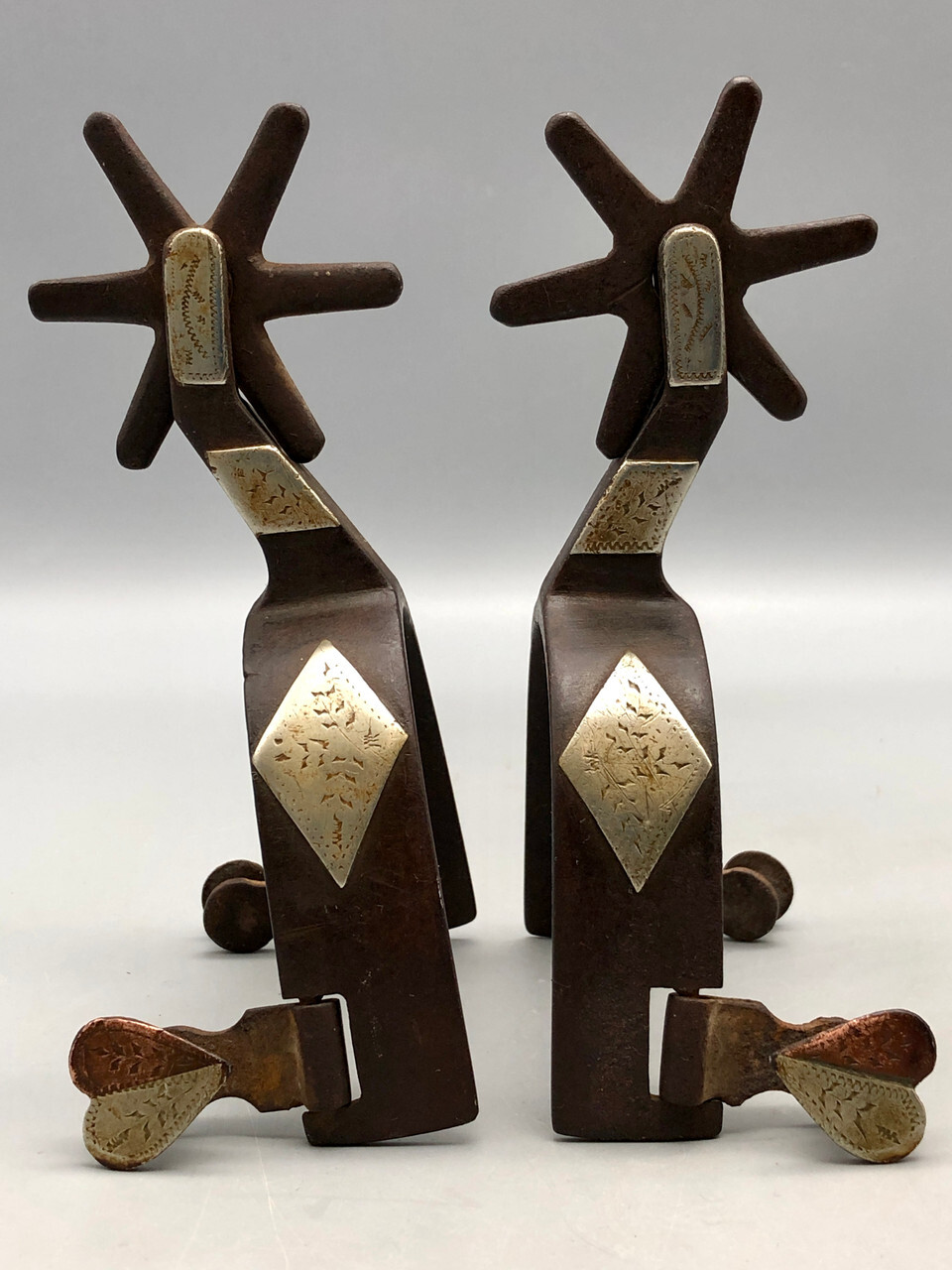
J.O. Bass No. 400 Spurs
Circa 1920s — our dating
Confirmed auction result: Sold for $4,000 (Buy It Now)
SKU WTP.SP091
- marked
NO. 400 MADE BY J.O. BASS TULIA, TEX.
- single mounted
- half-copper / half-silver heart buttons
- large six-point rowels
- Tulia maker mark
Rowels replaced, per our auction listing.
We later sold this pair for $4,000 using the Buy It Now option.
View Previous Listing View Auction Result
Previously handled
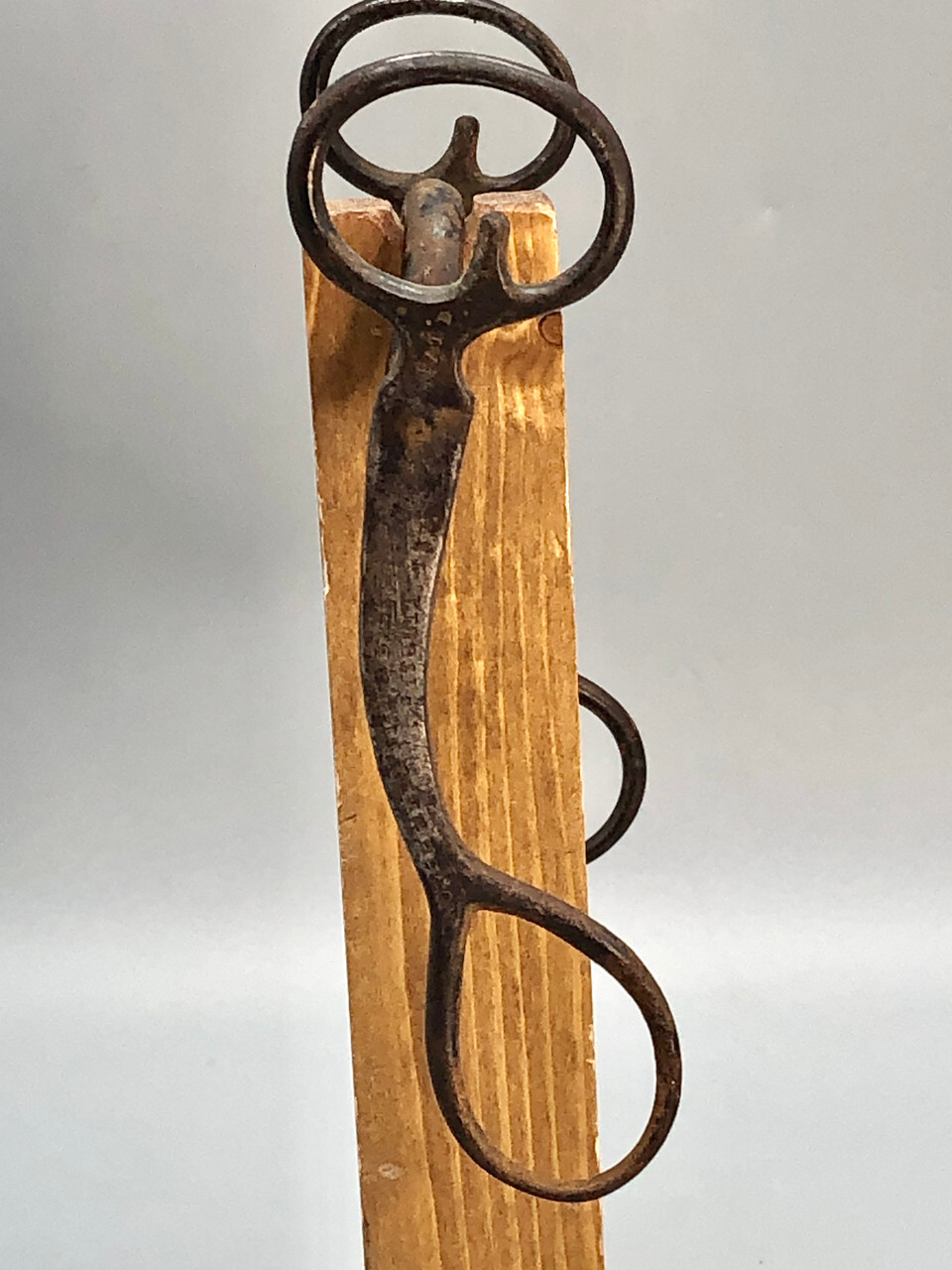
J.O. Bass No. 290 Bit
Early 1900s — our dating
Our historical listing price: $1,200
SKU WTP.BIT096
- black iron
- low port
- marked
NO. 290 MADE BY J.O. BASS TULIA, TEX.
- 5-inch mouth
- approximately 6½ inches overall
View Previous Listing
Previously handled
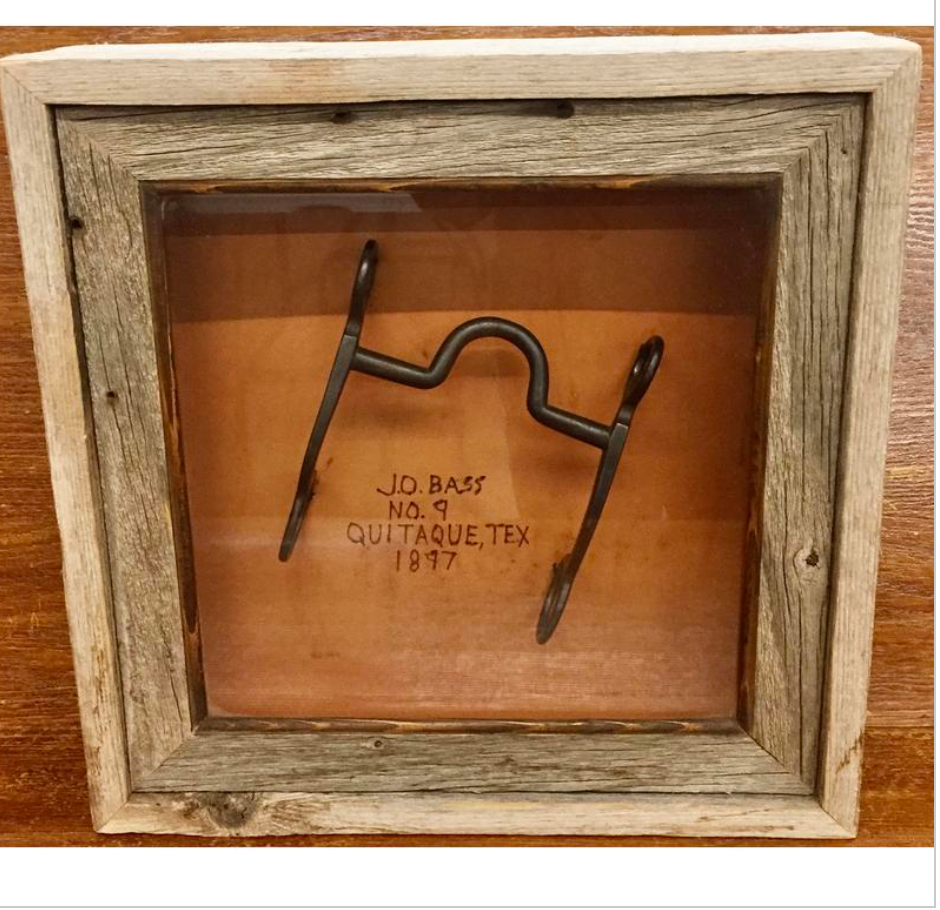
Early J.O. Bass No. 9 Quitaque Bit
Our dating: 1897
Our historical product-page price: $2,500
SKU BIT055
- J.O. Bass No. 9 bit
- We identify it with Quitaque, Texas
- displayed in a presentation case
- We date the example to 1897
We later offered this piece in our May 16, 2020 auction with an estimate of $1,500–$2,500. The lot passed and did not sell.
View Previous Listing View Auction Result
Bass-style comparison card
Maker unknown — Bass style
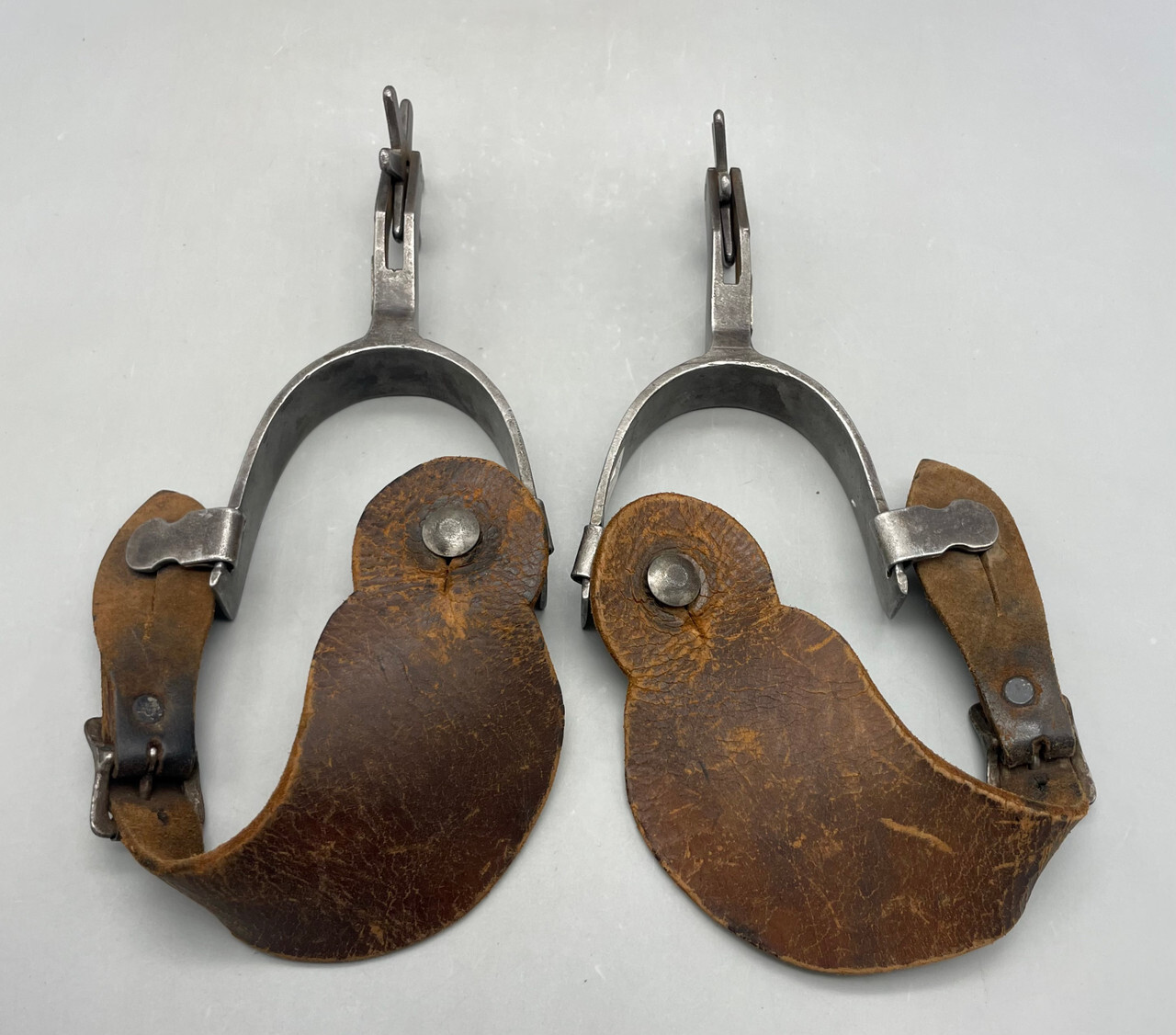
Bass Style Card Suit Theme Spurs — Maker Unknown
Our historical listing price: $1,500
SKU WTP.SP165
These spurs use card-suit decoration, etched heart buttons and visual details associated with Bass-style work, but we identify the maker as unknown.
They are included here as a comparison example — not as an authenticated J.O. Bass pair.
View Comparison Example
What have J.O. Bass spurs brought at auction?
Auction results vary significantly with pattern, condition, originality, provenance and decoration. The examples below are documented sales, not a price guide or guarantee of value.
| Example |
Auction |
Result |
Notes |
| No. 400 J.O. Bass Spurs |
Heritage Auctions — June 14, 2015 |
Sold: $3,875 (incl. buyer’s premium) |
Original maker-marked, silver-overlaid No. 400 J.O. Bass spurs with 2 1/2-inch drop shanks and 9-point, 2-inch rowels. Heritage archive |
| Rare No. 1650 J.O. Bass Spurs |
Heritage Auctions — June 14, 2015 |
Sold: $2,250 (incl. buyer’s premium) |
A maker-marked pair of J.O. Bass No. 1650 spurs documented by Heritage Auctions. Heritage archive |
| Large J.O. Bass Spurs — No. 1641 |
New Frontier Western Auctions — July 21, 2018 |
Sold: $9,750 (hammer) |
Estimate: $4,500–$6,500. iCollector record |
A Bass number alone does not determine value
Two Bass pieces carrying the same Bass number can differ materially in value.
Collectors also consider: originality, replaced or missing mountings, rowels, straps, repairs, wear, engraving, provenance and overall condition.
No. 400 appears on multiple surviving pairs, reinforcing the evidence that Bass numbers were reused and should not be treated as unique object identifiers.
From ranch cowboys to Texas Rangers and Hollywood
The Texas Historical Commission records that Bass’s customers extended beyond local Panhandle ranchers. Orders reached other states and included Texas Rangers as well as Western movie star Tom Mix.
This wider clientele helped make the Bass name part of both working-cowboy history and later Western collecting.
Where Bass history is preserved
The Swisher County Museum in Tulia preserves an important part of the Bass story. Published reporting describes a recreated Bass blacksmith shop containing many of his original tools, along with copies of the Bass work journals used to study and compare surviving pieces.
J.O. Bass work was featured in the W.K. Gordon Center exhibition “Texas Spurs and the Artists Who Created Them” (June 12, 2021–January 30, 2022).
J.O. Bass Blacksmith Shop historical marker
In 2016, the Texas Historical Commission erected an official historical marker for the J.O. Bass Blacksmith Shop in Tulia.
The marker records Bass’s 1879 birth, 1897 Quitaque shop, work for ranchers, Texas Rangers and Tom Mix, 1914 State Fair award, 1924 retirement and 1950 death.
View Texas Historical Commission Record
Find J.O. Bass pieces with us
We periodically handle J.O. Bass bits and spurs through both our shop and auction platform. Inventory changes, so use our live product and auction pages for current availability rather than relying on a permanent article to state what is in stock today.
Shop Spurs Shop Bits View Upcoming Auctions
Have a J.O. Bass bit or pair of spurs?
If you own a J.O. Bass bit, pair of spurs or related Western gear and are considering selling or consigning it, we can review the piece and its history.
Before contacting us, photograph:
- the complete piece
- both sides
- every maker mark
- the exact number
- mark location
- rowels and buttons
- straps or mouthpiece
- owner names or dates
- any family history, ledger reference, old photograph or documentation associated with the piece
Sell or Consign With Us
FAQ
Who was J.O. Bass?
James Oscar Bass was a Texas blacksmith and bit-and-spur maker born in 1879. He opened a shop in Quitaque in 1897, later worked in Tulia and retired from spur making in 1924.
When did J.O. Bass move to Tulia?
Published sources disagree. The Texas Historical Commission gives 1902, while other published accounts place the move between 1902 and 1906. This guide therefore uses “early 1900s” for the transition.
What does “MADE BY J.O. BASS TULIA, TEX.” mean?
It is a documented Bass maker mark associated with his Tulia-period work. Surviving examples often include a number before the wording.
Are J.O. Bass numbers serial numbers?
Published reporting indicates that the same number could be used on multiple pieces: Jane Pattie quotes Dwight Huber, whose father recalled orders in which the same numbers appeared on several pairs of spurs. For that reason, some Bass experts treat the numbers as pattern or style references rather than unique serial numbers.
Why are No. 165 and No. 166 important?
Published reporting on Bass’s work journals identifies No. 165 as the last recorded Quitaque spur entry and No. 166 as the first Tulia entry. They provide useful transition context, although the ledger entries are not dated.
What are Bass heart buttons?
Many Bass spurs use heart-shaped swinging buttons, and a half-silver / half-copper treatment became one of the most recognizable Bass decorative traditions.
Did J.O. Bass make one-piece spurs?
Published maker histories describe Bass forging his spurs from one piece of steel and finishing them by hand.
Did Bass patent a bit?
Yes. U.S. Patent No. 1,167,541 for a curb bridle-bit design was issued January 11, 1916.
Did J.O. Bass make spurs for Tom Mix?
The Texas Historical Commission records Tom Mix among Bass’s customers, along with Texas Rangers and cowboys beyond Texas.
Is a “Bass style” spur automatically J.O. Bass?
No. We have handled Bass-style spurs whose maker is explicitly unknown. Decorative similarity is not the same thing as a documented Bass maker mark.
Can Bass work journals help authenticate a piece?
They can provide valuable evidence because the journals record numbered work and descriptions, but authentication should still consider the complete object, mark, construction, condition and provenance.
Where can I see J.O. Bass history?
The Swisher County Museum in Tulia preserves a recreated Bass blacksmith shop, original tools and copies of his work journals. Texas also recognizes the J.O. Bass Blacksmith Shop with an official historical marker.
Where can I sell J.O. Bass bits or spurs?
We handle collectible Western gear through our shop and auctions. Use the Sell or Consign link on this page to contact us.
Sources & further reading
Western Trading Post
- J.O. Bass No. 400 Spurs — WTP.SP091
- J.O. Bass No. 290 Bit — WTP.BIT096
- Early J.O. Bass No. 9 Bit — BIT055
- WTP Auction Record — Early J.O. Bass Bit, May 16, 2020. auction.westerntradingpost.com
- Bass Style Card Suit Theme Spurs — WTP.SP165
- WTP Auction Record — No. 400 Bass Spurs, sold for $4,000 via Buy It Now. auction.westerntradingpost.com
Authoritative / historical
- Texas Historical Commission — J.O. Bass Blacksmith Shop. atlas.thc.texas.gov
- Doug McDonough, Plainview Herald — “Bass spurs functional works of art,” August 14, 2009. myplainview.com
- Swisher County Museum coverage — KFDA / NewsChannel 10. newschannel10.com
- W.K. Gordon Center — “Texas Spurs and the Artists Who Created Them” exhibition. tarleton.edu/gordoncenter
- U.S. Patent No. 1,167,541 — James O. Bass, “Bridle-bit,” issued January 11, 1916. Google Patents
Market references
- Heritage Auctions — J.O. Bass No. 400 Spurs, sold for $3,875 including buyer’s premium, June 14, 2015. historical.ha.com
- Heritage Auctions — Rare No. 1650 J.O. Bass Spurs, sold for $2,250 including buyer’s premium, June 14, 2015. historical.ha.com
- New Frontier Western Auctions (via iCollector) — Large J.O. Bass Spurs, lot 258, sold for $9,750 before buyer’s premium, July 21, 2018. icollector.com