
The Bolo Tie: Collector’s Guide to History, Identification and Dating
Posted by Jim Olson on Jul 7th 2026
Few Western accessories carry as much history, personality and craftsmanship as the bolo tie. Part neckwear, part wearable art and part symbol of the Southwest, the bolo has remained a favorite of Westerners, collectors, artists and just about anyone who appreciates a well-made piece of Western style jewelry.
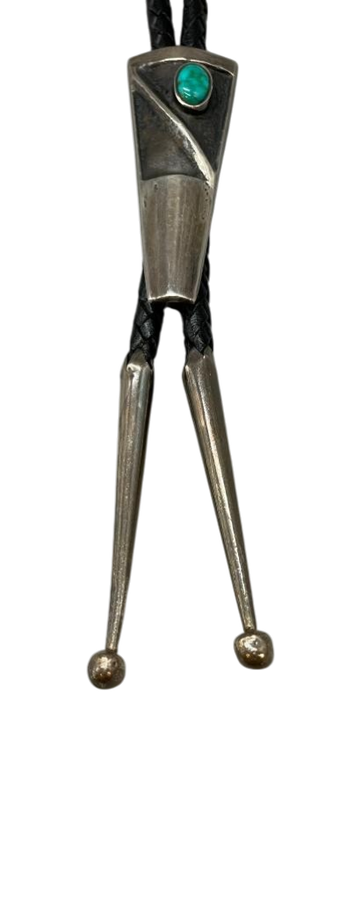
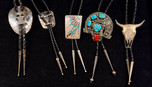
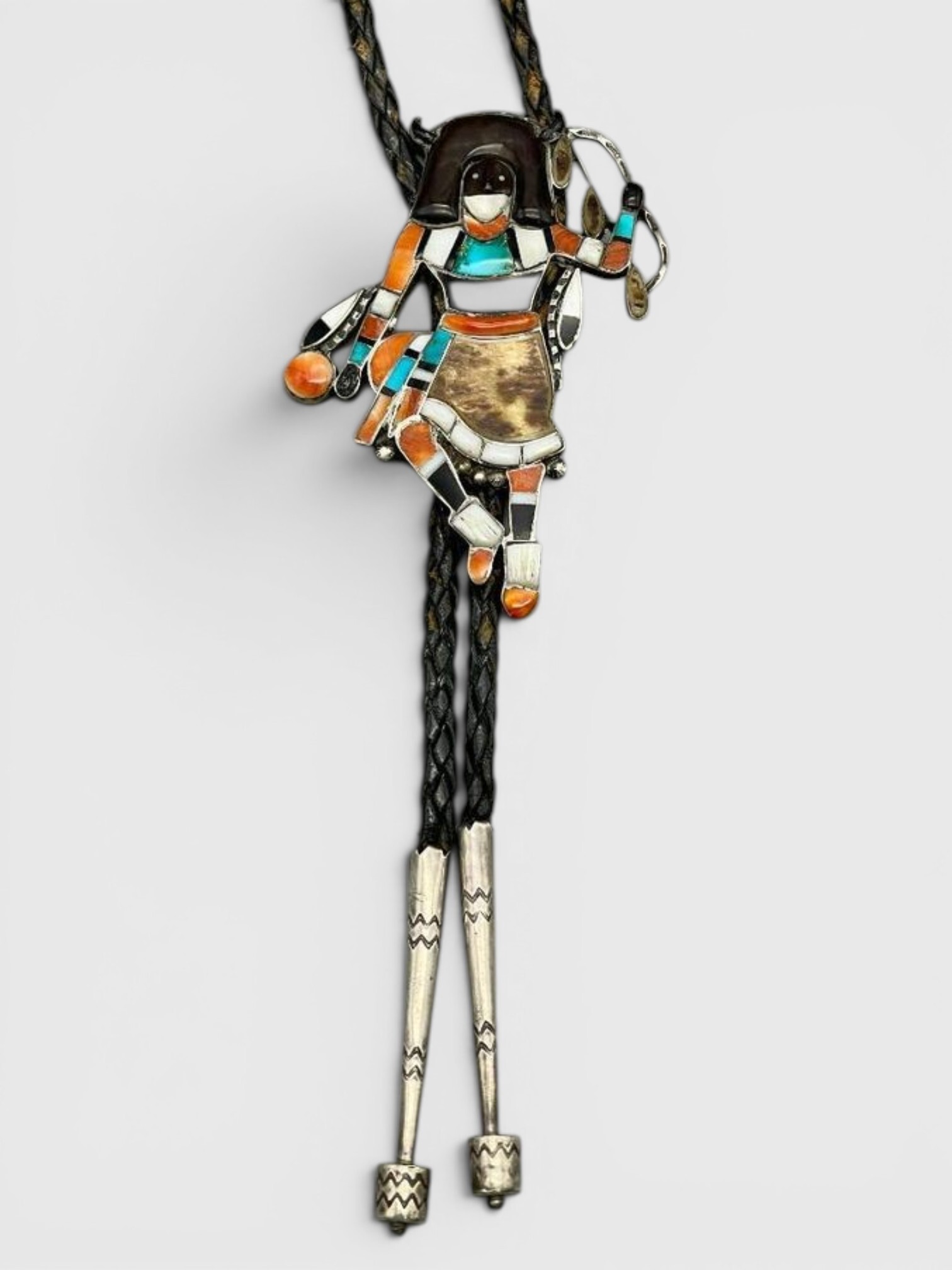
For decades, the bolo tie has been closely associated with the American Southwest, particularly Arizona, New Mexico and Texas. The simple form of a cord worn around the neck with an adjustable slide has given silversmiths numerous opportunities for creativity. Bolos may feature designs such as turquoise, coral, shell, petrified wood, silver overlay, inlay, hand stamping, figures, animals, brands, emblems and just about any subject imaginable.
Yet for such a familiar item, the history of the bolo tie is more complicated than many realize.
THE ORIGINS OF THE BOLO TIE
Victor E. Cedarstaff of Wickenburg, Arizona, is often credited with inventing the bolo tie in the late 1940s. There is a well-known story of a horseback ride during which his hat came loose and was tied with a cord around his neck. A companion reportedly remarked that it looked like a tie, inspiring Cedarstaff to develop the idea further. It is a good story, and Cedarstaff certainly played an important role in popularizing the form. However, evidence does not establish him as the inventor of the bolo tie.
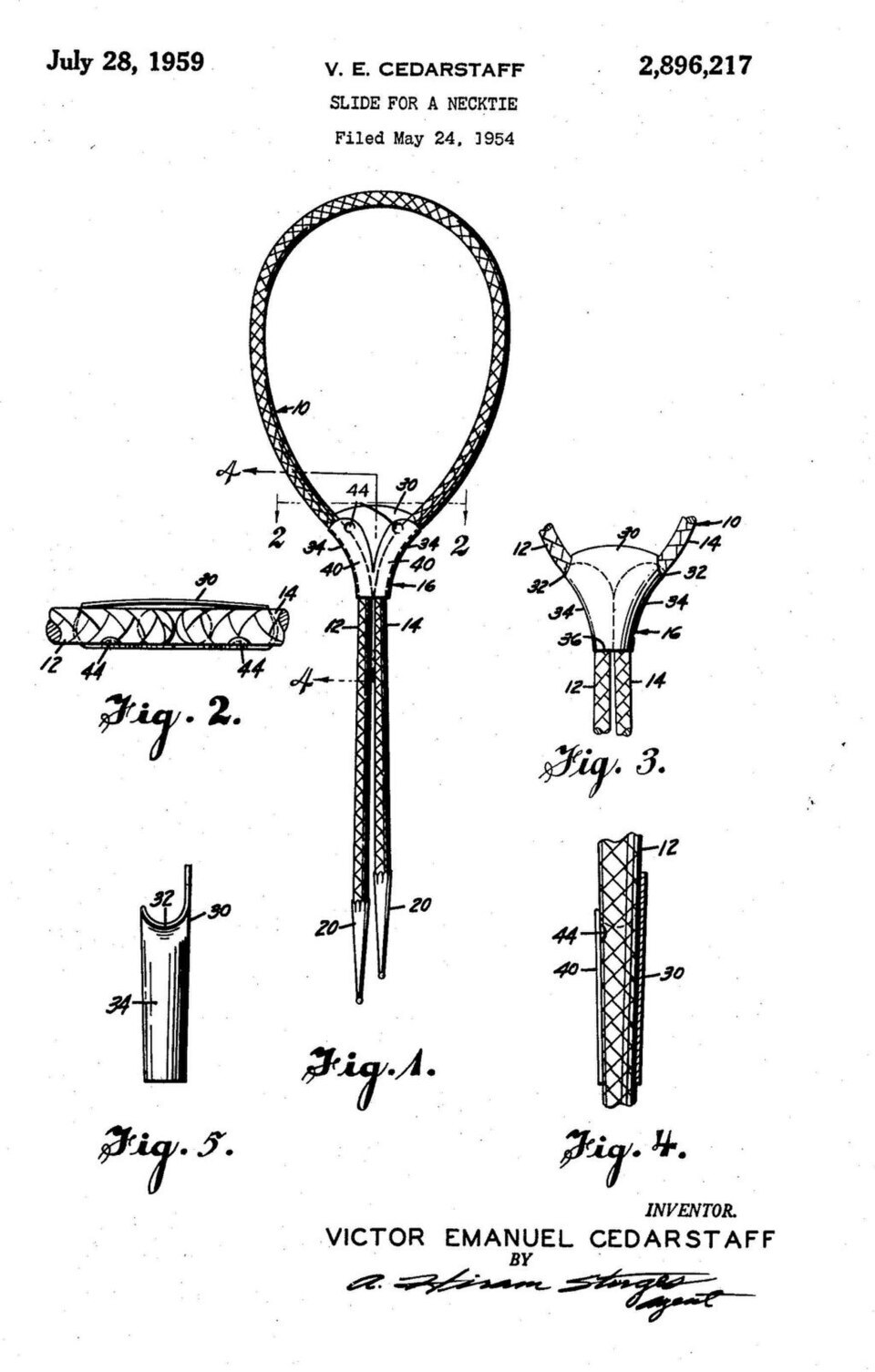
Cedarstaff did file a patent application in 1954 for a “Slide for a Necktie,” which was issued in 1959. The patent covered a slide mechanism used on a cord-style necktie, rather than the invention of the bolo tie itself. Read that again — Cedarstaff patented a slide mechanism for a necktie, not the actual bolo tie itself.
As a matter of fact, earlier examples and related bolo-like neckwear had already appeared in the Southwest for years prior to this, including scarf slides, neckerchief hardware and early cord ties.
Research has also documented other bolo-style ties being made and sold by the early 1950s. In 1953, William H. Meeker of Hickok Manufacturing Company applied for a patent titled “Apparel for Neckwear,” describing an adjustable necktie and slide arrangement that clearly resembles the modern bolo tie. Early Western catalogs and newspaper advertisements from the same period used a variety of names, including “Western tie,” “string tie,” “gaucho tie,” “neck rope,” “bola tie” and “bolo tie.”
It is fair to say that Wickenburg played an important part in the bolo tie, as Cedarstaff certainly played a major part in advancing it. But rather than crediting one person with creating the bolo tie overnight, it is more accurate to view it as a Southwestern form of neckwear that developed during the 1940s and 1950s with contributions from many. Native American silversmiths from the Southwest were instrumental in transforming the bolo from a Western niche market item into a piece of neckwear recognized around the world as a form of Southwestern style jewelry.
THE BOLO BECAME A WESTERN ICON
By the mid-1950s, bolo ties had become widely available. They were practical, comfortable and less formal than a conventional necktie, while still offering a finished appearance. Their popularity grew by leaps and bounds throughout the 1960s and 1970s as there was a world-wide surge in the popularity of Native American silver and turquoise jewelry. Now the Native American silversmith had taken the reins with regard to the production of bolos.
The bolo eventually became important enough to earn official recognition. Arizona designated the bolo tie as its official state neckwear in 1971. New Mexico adopted the bolo as its official state tie in 2007, and Texas designated it as the official State Tie of Texas that same year.
Today, bolo ties remain a staple of Western dress, but they have also found a broader audience. Contemporary artists continue to produce bolos ranging from traditional turquoise-and-sterling examples to highly modern pieces featuring unusual materials, bold imagery and inventive metalwork.
DATING A VINTAGE BOLO TIE
Dating a bolo tie is rarely as simple as looking at one feature and assigning a year. A proper evaluation considers the slide, clasp, hallmark, construction, materials and overall style.
The back of the slide is a good place to begin when determining a date range for when the piece may have been made.
Early Loop-Back Construction
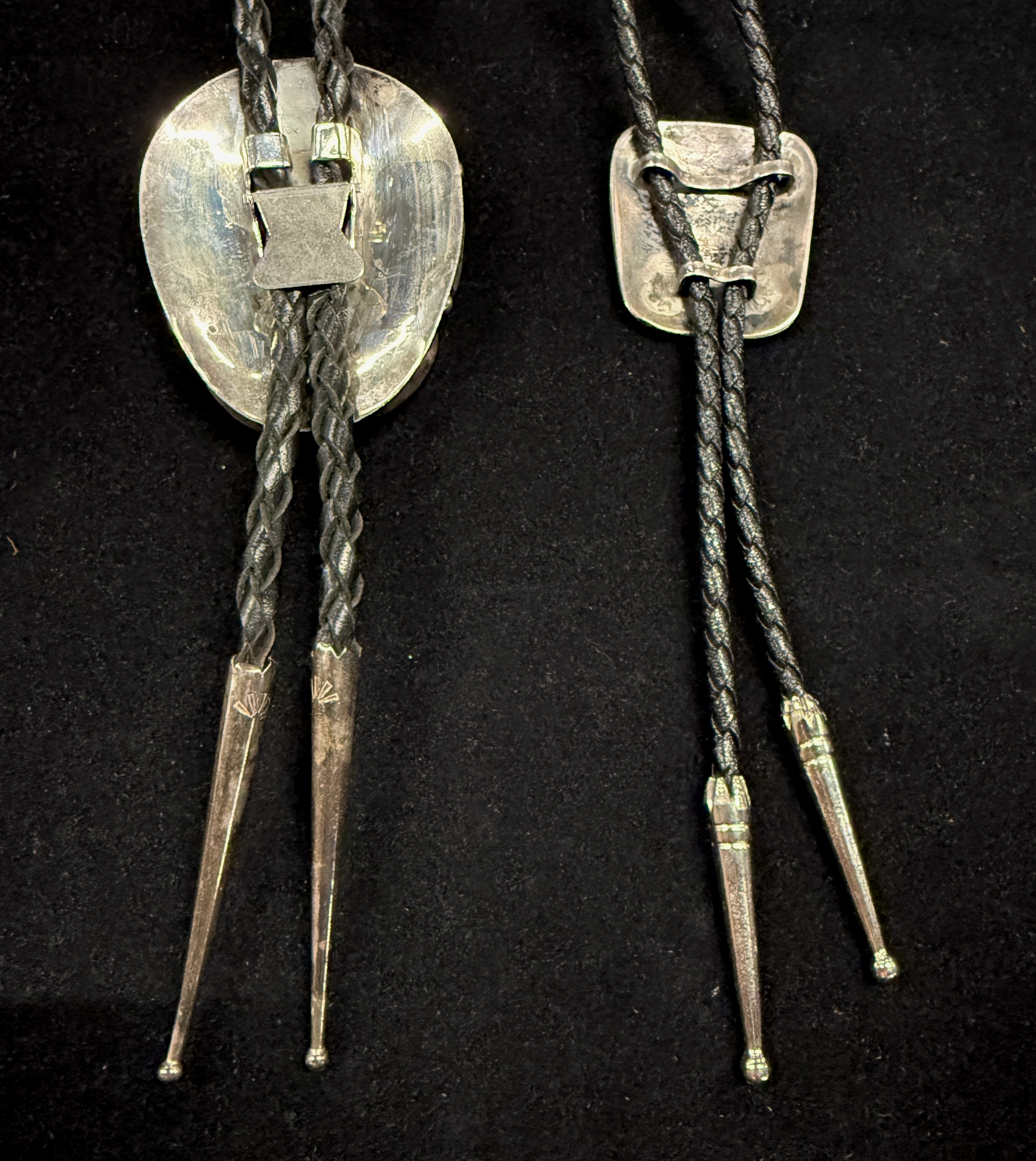
Some early bolo slides used simple silver loops or channels on the back. The cord passed through these loops and was held in place by tension. This style may suggest an earlier construction method, particularly on a piece with period designs and materials indicative of the 1940s-50s.
However, loop-back construction alone does not prove a bolo is old. Many contemporary silversmiths intentionally use this traditional style, especially on handmade pieces. The slide must be evaluated as a portion of the whole picture.
Bennett Clasps
The most commonly encountered vintage bolo clasps are marked either “Bennett Pat. Pend. C-31” or “Bennett Pat. Pend..” These were commercial findings sold to jewelers and silversmiths to connect bolo slides and cords. Keep in mind, a Bennett marking is not a maker’s hallmark, it simply identifies the clasp, not the artist who made the bolo.
Collectors commonly associate the “Bennett Pat. Pend. C-31” clasp with bolos made from the late 1950s through the late 1960s. Later Bennett-marked examples without the “C-31” designation are generally associated with production from the early 1970s through the late 1980s. These markings can be useful dating clues, but they should not be treated as absolute proof of when a bolo was made, as these clasps were sold well past the time they were actually produced.
Clasps sometimes remained in inventory for years before being used. A silversmith may also have replaced a damaged clasp during the life of the piece. For that reason, a clasp usually helps establish the earliest likely period for a bolo, rather than an exact manufacturing date.
Unmarked clasps should be examined carefully as well. Most are later commercial examples, made after the late 1980s, while others may be handmade Bennett-style mechanisms made by the artists themselves.
Other Patented and Commercial Clasps
A number of inventors developed clasp mechanisms or slides along the way. We already covered Victor Cedarstaff above. John W. Day received a patent in 1972 for a spring-loaded bolo clasp, based on an application filed in 1966. James H. Mosby patented an interchangeable bolo-slide design in 1969 after filing in 1968.
These patents demonstrate how popular the bolo had become. Manufacturers and makers were looking for improved ways to adjust cords, secure slides and allow decorative elements to be changed. Again, the presence of a particular clasp style should be used strictly as one clue of many—not as a final answer.
What Else to Look For
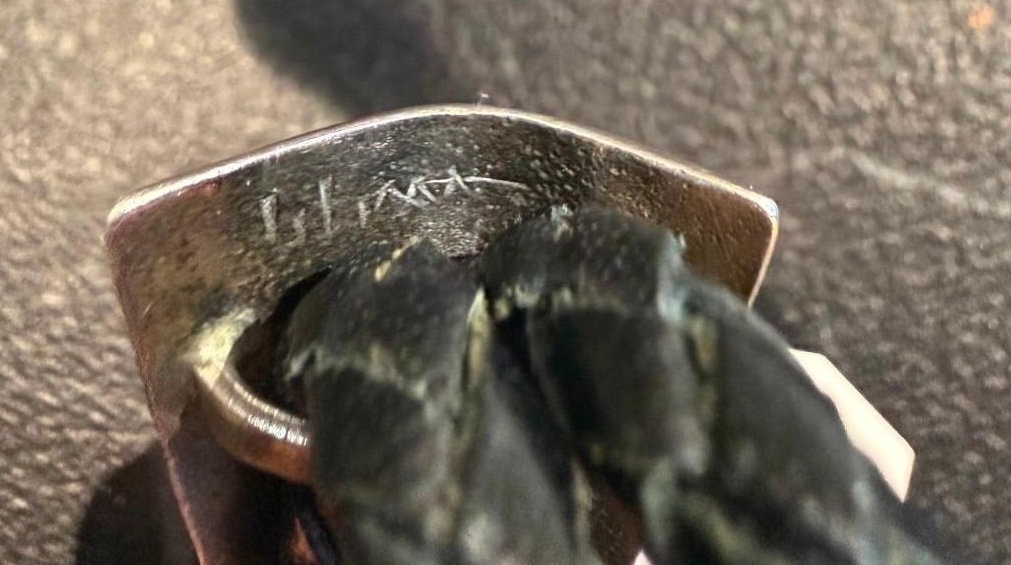
A hallmark can be a very useful feature on a bolo tie. Check the back of the silver work and any attached decorative elements thoroughly. Some marks are lightly stamped or may be partly hidden by the clasp or slide mechanism (See Charles Loloma's hallmark below, on a bolo tie featured in our 2025 Advanced Collector's auction.)
When a bolo is marked by a recognized artist, that information may provide a much more reliable date range than the clasp alone. Artist biographies, known working dates and examples of documented work can help narrow the time period.
Construction is also important. Look closely at the silver work. Handmade sawtooth bezels, hand stamping, repoussé, overlay, twisted wire accents, shadowbox designs and traditional inlay all have certain dates they came about, and may help identify a region or maker. At the same time, style should be used carefully. A bolo should not be assigned to a particular tribe or artist based on appearance alone except perhaps by a recognized expert. Even then, it is a subjective opinion.
The cord and tips deserve attention as well. Braided leather cords and silver or metal tips are often replaced because they receive the most wear. A replacement cord does not make a vintage bolo newer, but it should be noted when evaluating condition and originality.
Stone condition also can come into play. Turquoise, coral, shell and other materials may show natural variation, wear or repairs. Some collectors appreciate the look of an older, well-worn stone that is turning a variation of colors, while others prefer clean, stable material. Neither preference is wrong, but the condition of the setting should always be considered when determining age and value.
Practical Tips for Buyers
When buying a vintage bolo, do not rely on a single feature to put a date on it.
A Bennett clasp does not indicate a particular artist made the piece. A sterling mark does not establish tribal or regional affiliation. A turquoise stone should not be assigned to a mine without reliable documentation. A cord may have been replaced. A modern silversmith may have intentionally used an old-style construction.
The best evaluations consider all available evidence together:
- Hallmark or maker attribution
- Construction and silver work
- Clasp type
- Cord and tips
- Materials and stone condition
- Provenance
- Overall style and workmanship
Also, a well-made contemporary bolo can be every bit as desirable as a vintage example. Likewise, an older bolo with no hallmark may be an important piece if the craftsmanship, materials and design support a certain attribution. For tips on item provenance, take a look at our guide.
BOLO OR BOLA?
Well, it depends upon who you ask — both spellings have long been used. Arizona’s official declaration refers to the “Bola tie,” while collectors, dealers and makers more often than not use “bolo” in modern times. Some argue the word Gauchos use for the device that wraps around an animal’s hind legs (similar to a North American cowboy roping an animal’s hind feet) is a “Bola” and this is where the term originates. Maybe so.
For practical purposes, however, “bolo tie” is a more widely recognized modern spelling. Just Google it yourself and see which comes up more often. Still, when researching older advertisements, catalogs and legal references, it is useful to search both terms — as well as related names such as string tie, Gaucho tie and Western necktie.
Whatever it is called, the bolo (or bola) tie remains one of the most recognizable forms of Western neckwear. It is functional for dress, a canvas for artistic expression and a lasting connection to the history of the American Southwest.
Whether vintage or contemporary, if you're interested in getting an authentic hand-made bolo tie, we have a curated selection of bolos to bid on in our auctions. See what bolos are featured in our next one here.
Jim Olson © 2026
WesternTradingPost.com